The Journey to Peyto Lake
I’d always wanted to visit Peyto Lake, but Peyto Lake never seemed to want me to visit it.
To be fair, on my first trip to Banff back in 2015, I actually didn’t know Peyto Lake existed. However, after seeing tons of incredible photos of it on Instagram during the preceding years, I knew my next journey there had to include a stop at Peyto Lake.
In November 2019, I got my second chance. My now wife and I visited Banff after a short work trip to Edmonton. Much like my first trip, snow blanketed the peaks, evergreens and streets. One day, as we drove through the park, we passed Lake Louise, cruised up the Icefields Parkway and then drove by Bow Lake’s towering peaks and frozen water. A few minutes later, a sign signalling Peyto Lake appeared. As we approached the road that led up to the Peyto Lake lookout, another sign appeared: Closed for Construction. The park was improving the Peyto Lake lookout area. My chance to photograph one of Banff’s most iconic lakes would have wait a bit longer.
In June 2021, as COVID restrictions were loosening and Canadians were allowed to travel within Canada, we booked a trip back to Banff. This time, we travelled there during the summer alongside my younger sister. As I started researching the best things to do in Banff during the summer, I also looked up the status of Peyto Lake’s construction. I gawked at the screen. Peyto Lake was still closed for construction. At this point, I wasn’t sure how extravagant this new and improved lookout point would be, since it was taking years to build. I also wasn’t sure how much longer I’d have to wait to see it.
Finally, ten years after my first trip to Banff, my wife and I planned our fourth trip to the park. I, again, Googled whether the Peyto Lake lookout was open and, to my surprise, it was. This was it - my chance to finally witness and photograph the iconic Peyto Lake.

Getting to Peyto Lake
Peyto Lake is about an hour and fifteen minute drive from the town of Banff. To get there, you travel down the Trans Canada Highway for about fifty minutes, and then hop on the Icefields Parkway right after Lake Louise towards the Jasper. The Icefields Parkway is one of the most scenic drives in the world, making the cruise into Peyto Lake magical. Just be aware that, in the winter, the road can get pretty slick and there’s minimal cell phone coverage, so drive cautiously and prepare accordingly!
After driving on the Icefields Parkway for about half an hour, you’ll pass Bow Lake (another incredible lake to stop at) and then, a few minutes later, a sign for the Peyto Lake lookout will appear on the side of the road. Turn left (if coming from Banff) and drive up the short road towards the Peyto Lake lookout parking lot.
Hiking to the Peyto Lake Lookout
The hike to the Peyto Lake lookout is only about a 10-15 minute walk from the parking lot. The walk is fairly easily. However, the elevation gain is about 60 metres (200 feet). The path is paved, making the trek pretty smooth in the summer time. In the winter, however, the path can become pretty slick. I know this because I almost wiped out multiple times (not fun when you’re holding a camera). If you’re planning on hiking to the Peyto Lake lookout in the winter, bring a solid pair of hiking boots!
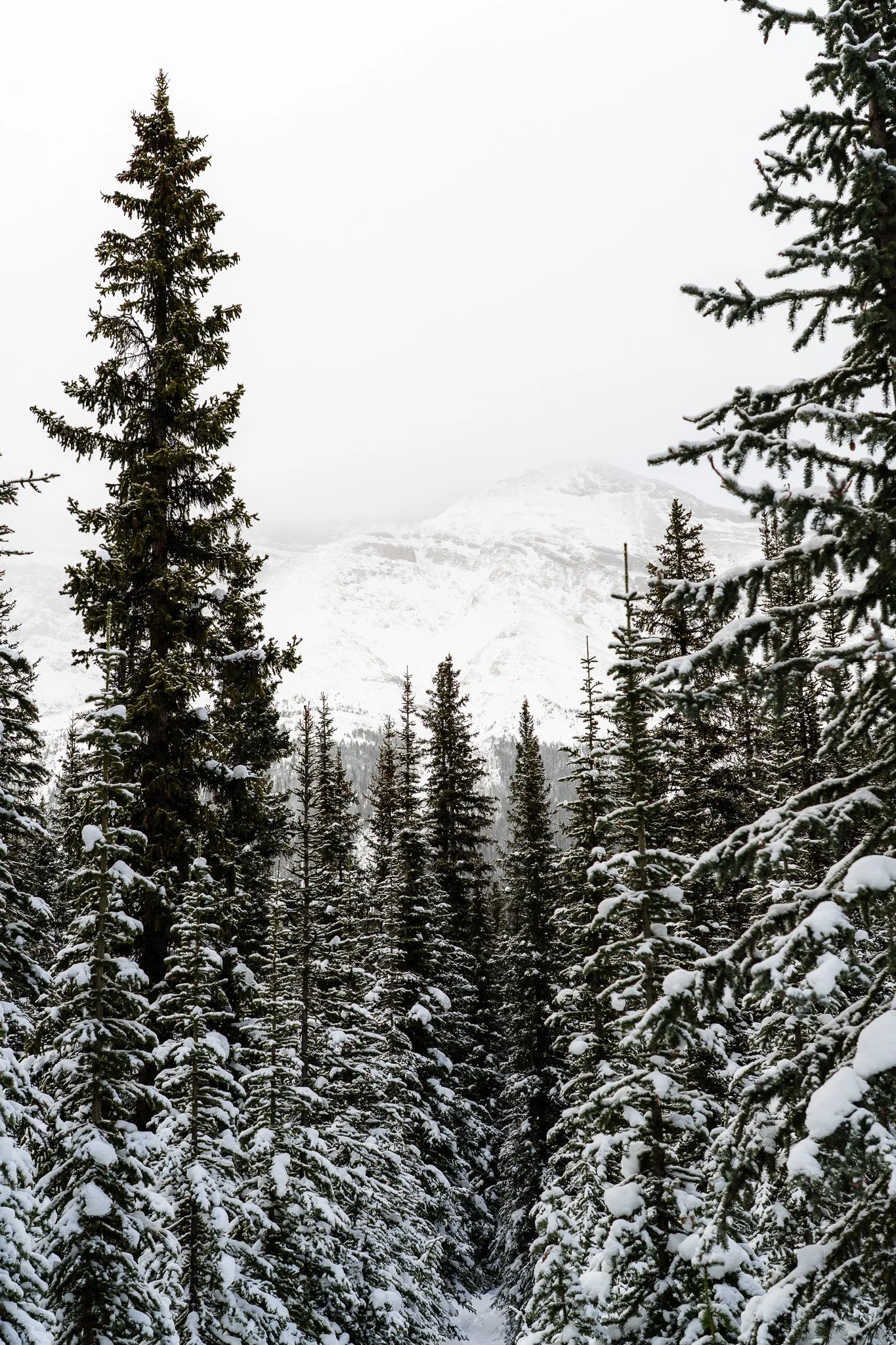
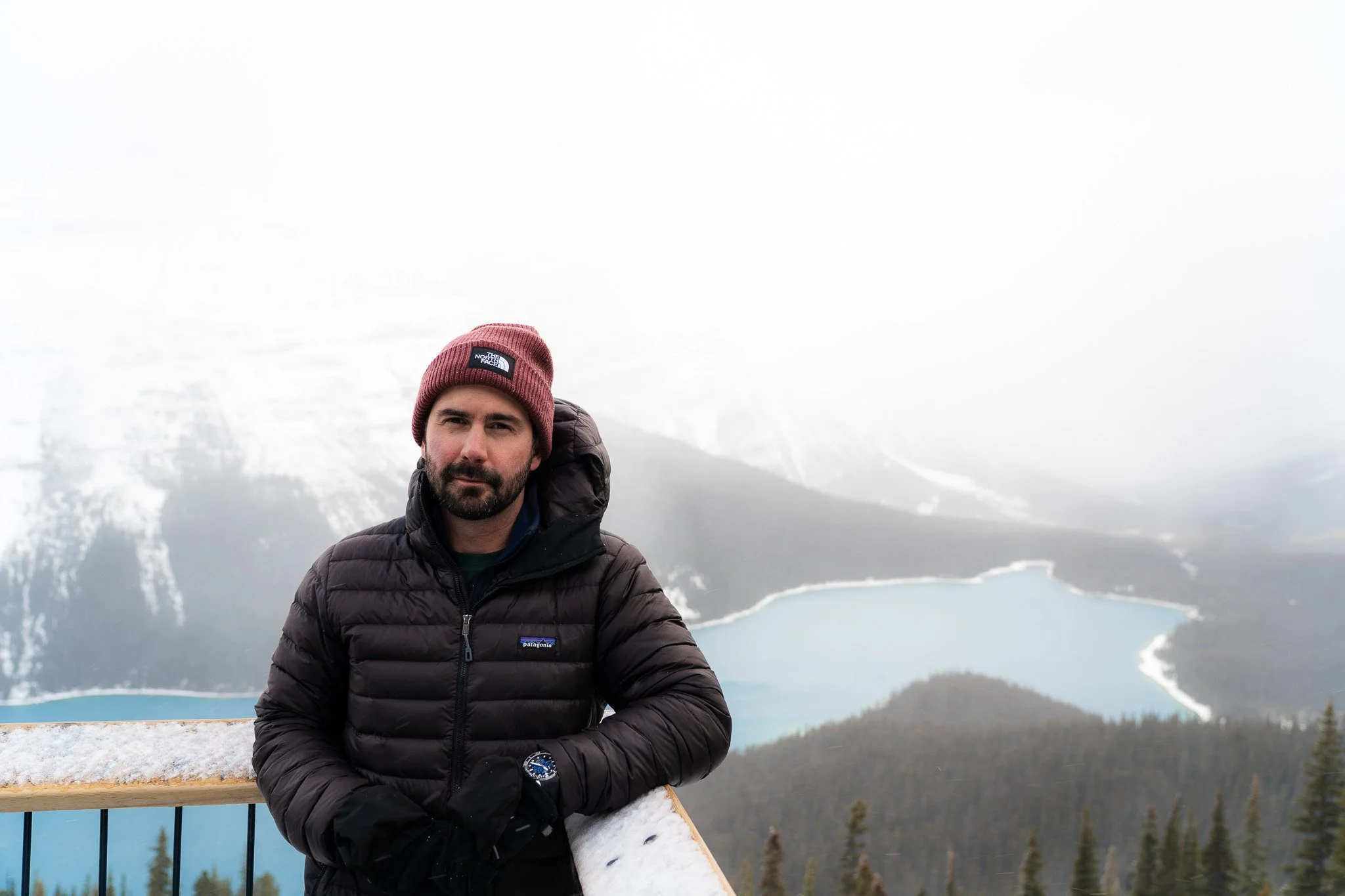
The trail itself is surrounded by evergreens and rocky mountain peaks. After reaching the top of the trail, you’ll land on a nice wooden platform that overlooks Peyto Lake. As this is one of Banff’s most famous lakes, be prepared to share the viewing area on the platform with tons of tourists!
Tips for Photographing Peyto Lake
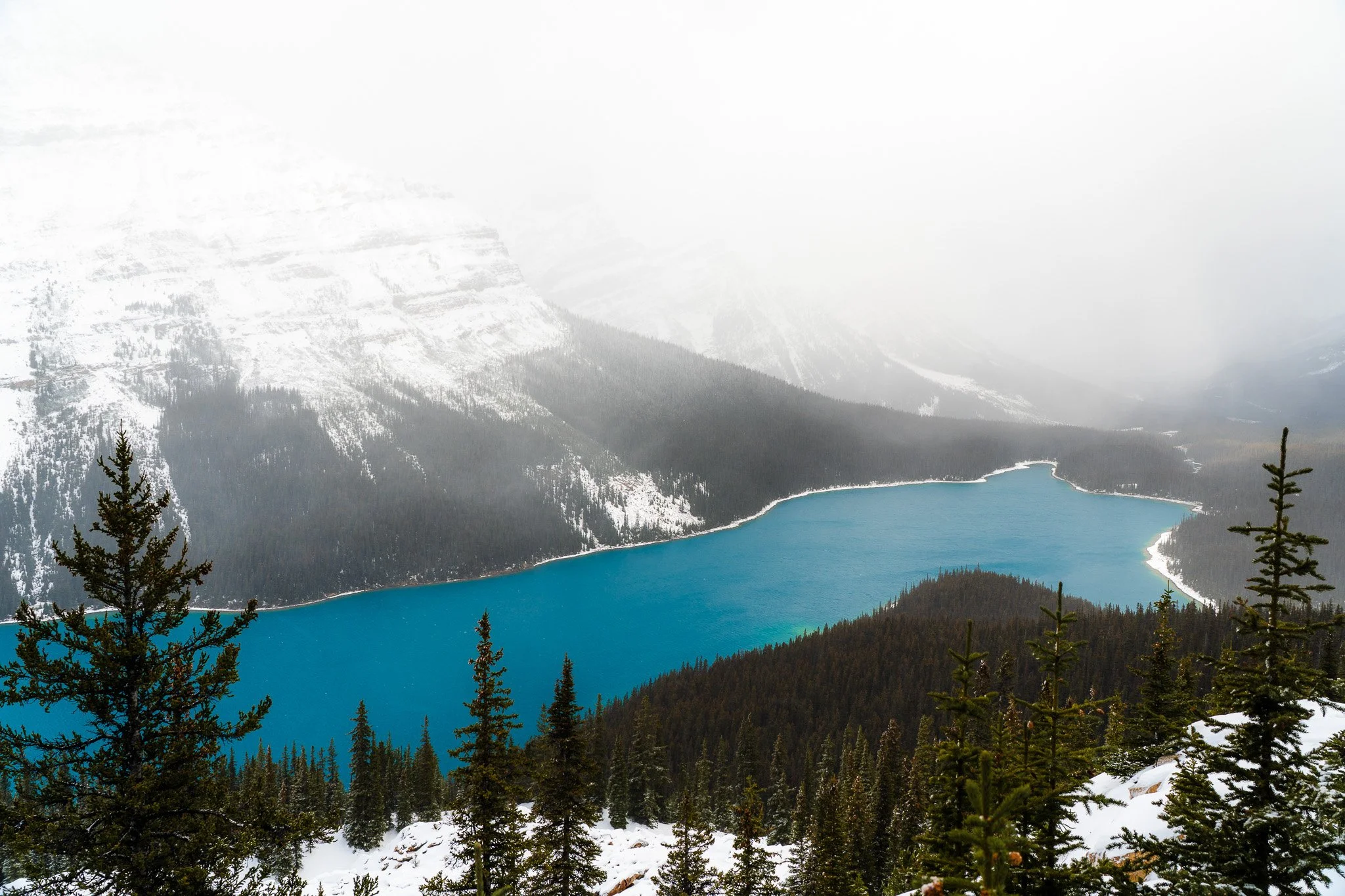
Now, you’ve likely seen tons of photos of Peyto Lake from above, showcasing the lake’s iconic wolf-like shape. This dreamy shot is, more often than not, taken from the Peyto Lake lookout. The lookout’s position high above the lake provides a clear view of the lake’s wolf-like shape (making the 200 foot climb completely worth it). The lookout is also angled directly at the iconic view, making it fairly easy to frame your camera for the shot.
Photographing landscapes is a completely subjective thing, and however you choose to photograph it is completely up to you, but I’d recommend using a wide angle lens for the Peyto Lake shot (any where from 24mm to 35mm). With a wider field of view, you’ll be able to capture not only the lakes, but also the surrounding mountains and trees that help make Peyto Lake so special.
The one camera accessory I would recommend bringing is a circular polarizer. Peyto Lake is famous for its bright turquoise water. By using a circular polarizer, you can cut through the reflections on the water and make the colour really pop in your photos. As I found out, the circular polarizer is especially beneficial in the winter. During our day at Peyto Lake, snow was coming down across the landscape. While this was epic and added to the view, it also created a haze across the scene, making Peyto Lake’s iconic colour look pretty washed out. With my circular polarizer, I was able to cut through the haze, capturing both the snowy scene and the lake’s vivid colours.
Conclusion
In the end, I finally made it to Peyto Lake - and it was 100% worth the ten year journey.
The lake’s iconic wolf-like shape and vivid turquoise colour provide a landscape scene that most travel photographers dream of. Even better, the park provides a lookout point high above the lake to help you capture the iconic scene.
To get to Peyto Lake, travel down the Trans Canada Highway and then the Icefields Parkway from the town of Banff for about an hour and fifteen minutes, and then turn into the Peyto Lake lookout parking lot. From there, hike up the Peyto Lake lookout trail for about 10-15 minutes. Once you’re on the platform, snap some photos using a wide angle lens and a circular polarizer to make the lake’s colours really pop. And then put down the camera and take in one of Canada’s most iconic lakes.